
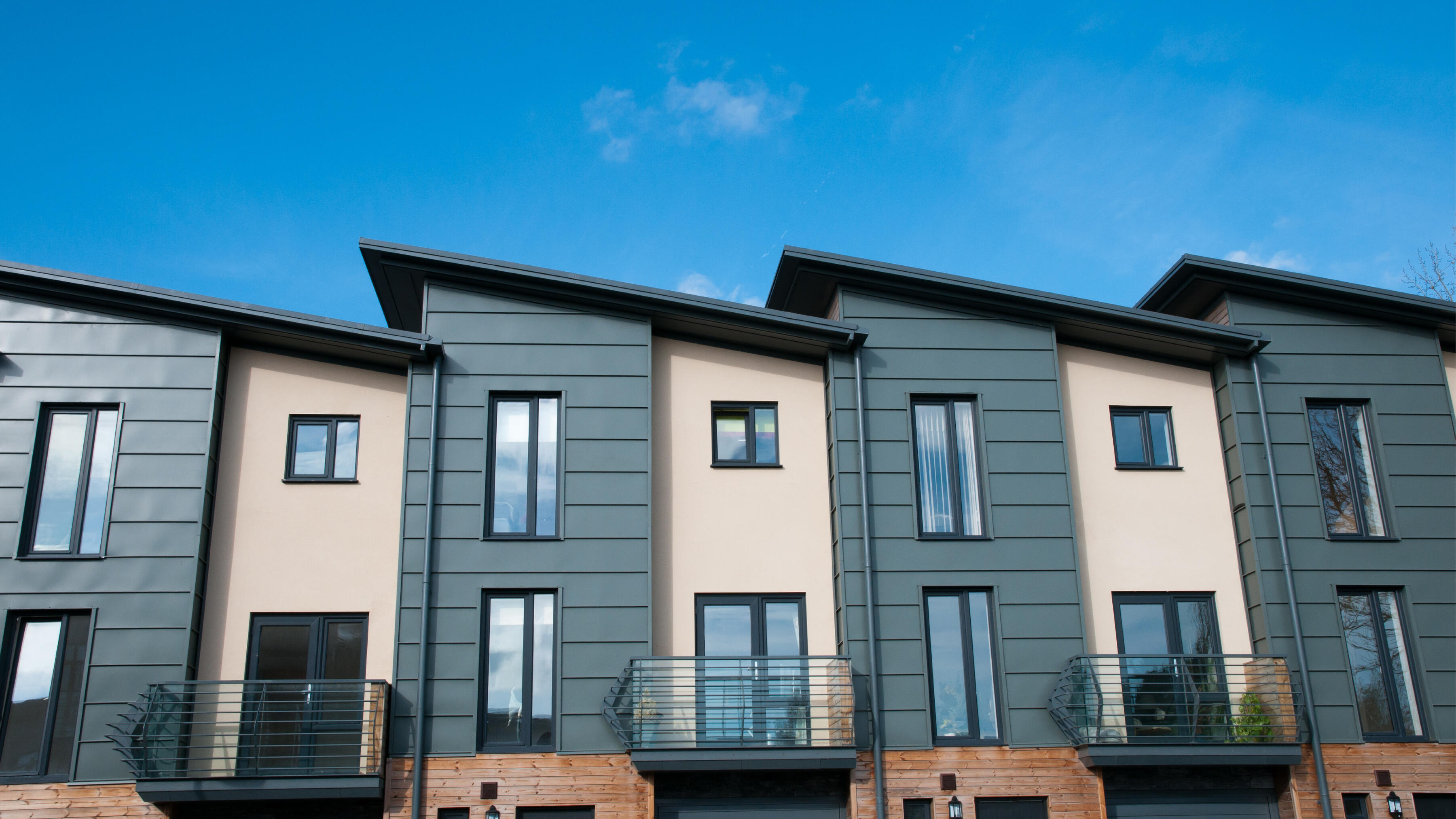
One of the by-products of dense populations is housing with shared walls where there isn’t room for or availability of detached single-family homes. From condominiums to townhomes, homebuyers can get all the benefits of homeownership at a lower cost and with fewer responsibilities for outside and building maintenance, all while enjoying the shared amenities of their unique community. Best of all, these homebuyers don’t pay a landlord and can build their own equity.
Condos and townhomes are good housing alternatives for people who wish to be part of the thrum of the city, have access to amenities they wouldn’t be able to get otherwise. They’re willing to pay others to help manage, maintain, and increase the property’s market value. It’s a lifestyle choice that’s ideal for singles, couples, small families, and retirees. If that sounds good to you, here’s what you need to know – how condos and townhomes differ and what the ownership experience will be like.
See: A Simple Guide for First-Time Home Buyers
Condos
A condo can be a single-family home that’s been divided into small units, an older apartment building that’s been converted to condominiums, or a newer complex built with shared amenities in mind. You own the air space defined by your interior walls, but you don’t individually own anything else in the building or surrounding property. When you buy a unit, you agree to pay monthly, quarterly or annual fees to your community’s homeowner association (HOA). Your unit equals your vote in how things are run from which flowers are chosen for planting in the spring, to when to repair or replace items and fixtures that all unit owners use, such as gym equipment and elevators. That in and of itself is a responsibility. To live in a community, homeowners must share and abide by the majority vote, even if a vote doesn’t go their way.
See: How to Set Up an Office in a Small Space
Choosing the right condo community is important as they each offer different benefits and drawbacks. Some communities offer a plethora of amenities, including gyms, swimming pools, meeting rooms, clubhouses, concierge and business services, doormen, dog parks, and much more. These will cost you more in shared fees, but the luxury and convenience could be well worth it. The flip side is that you also pay for community repairs, upkeep, and improvements your fellow residents vote for. Often, the buildings are older. Occasionally, there may be a special assessment to install a new perk or to repair or replace worn-out fixtures such as aging elevators, retiling a swimming pool, putting on a new roof, or repaving the shared garage.
Even so, condominiums tend to be cheaper to buy than other housing because you have less ownership in the property. Condo owners also pay less in property taxes because the units tend to be smaller per square foot.
Insurance is also less expensive. Your HOA will have a master insurance policy that you help pay for that covers liabilities and damage. If your HOA has all-in coverage, all property in the development and fixtures in your unit are protected. Some HOAs only cover common areas, known as bare walls coverage. However, that doesn’t mean you should skip buying insurance – you’ll still need insurance for personal belongings.
See: Discover the Best Neighborhoods in Greenville, SC
If you have a mortgage on your condo, your lender and possibly your HOA will require you to get an HO-6 policy, a form of homeowner’s insurance that covers liability claims and property losses. This policy covers the following:
Dwelling – repair or replacement of damaged items such as drywall due to covered losses
Personal property – repair or replace damaged personal items due to covered losses
Liability – covers medical bills due to accidents within your unit
Loss assessment – covers accidents in common areas such as stairwells and swimming pools that exceed the HOA’s master policy limits.
Your HO-6 policy will have coverage for some events such as damage from vandalism, fire, windstorms, hail, and ice, snow and sleet. But it may not cover other events such as flooding, termite damage and earthquakes.
You should know that it may be harder to get a mortgage loan for a condo. Because property values depend on others in your community as well as yourself, lenders consider condos a bigger risk than single-family homes. For this reason, Fannie Mae and Freddie Mac, two government-sponsored entities that purchase mortgage-backed securities, have rules for lenders to follow for consumer purchases of condos and co-ops of five or more units before they will issue a warranty. Lenders must look at HOA board meeting minutes, reserve studies, and repair documentation – specifically for signs of deferred maintenance, unsafe conditions, unpaid homeowner fees, inadequate reserves for planned maintenance, and a high number of rentals, all of which can bring property values down. They also look at special assessments, which could indicate poor HOA management, and they must verify that the borrower can still afford the payments along with the special assessment. Lenders won’t loan mortgage money a borrower if the HOA records show more than 35% of the units are rentals.
Townhomes
Bankrate.com suggests that townhomes are the best of both worlds between a detached single-family home and a condo. The ownership is the same as with a single-family home where you own the interior, exterior and the land your unit comes with including a front and back yard. You’re responsible for your own upkeep, but some townhome communities also have an HOA that does the yard maintenance, paints the trim and front door, replaces the roof, so that all units appear equally cared for, which helps protect property values. Like condos, townhomes also share walls, but they tend to be better built than apartments and there is usually a code that requires a firewall be built between units. They may also have shared amenities such as parking, green space, or a swimming pool.
Townhouse communities are more expensive than other shared wall housing. They’re typically built in nicer neighborhoods with more square footage than condos or apartments offer. They tend to be more luxurious and less densely populated. According to ImpressionHomes.net, townhomes are typically planned to be near convenient, desirable amenities such as transportation, parks, restaurants and services. Sharing at least one wall with another townhouse helps keep heat and air longer, which reduces utility costs. With fewer entry points, they’re also safer from burglers. Because owners are responsible for more maintenance, HOA fees tend to be lower.
Some townhome communities don’t allow owners to rent their homes out, but those that do tend to be good investments, as the location is typically desirable and the property is kept in good condition by an HOA or property management company. Purchase prices tend to be lower than single-family homes, but they can also be higher the closer they are to city jobs and recreation.
A word about HOAs
HOAs are run by volunteers – you and your neighbors. Your community can rise or fall in value depending on the condition of the property, so it’s in your interest to take your turn on the board of directors. You’ll have a little less freedom to personalize your home than you do in a detached single-family home, but your property values will be more protected. Before you purchase any home managed by an HOA, you deserve to see all HOA documents to make sure you’re buying into a well-run community.


